

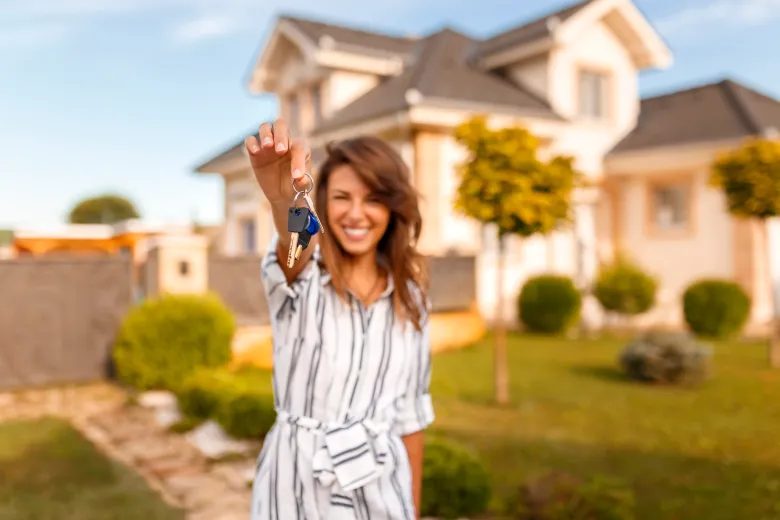
She's Not Waiting: How Single Women Became the Quiet Force Reshaping American Homeownership
Despite earning less, sacrificing more, and navigating a brutal market — single women now own over 20 million homes. Here's the story behind the numbers.
20M+
single women homeowners
2×
as many homes as single men
47 of 50
states where women lead
Something extraordinary has been happening in the American housing market — quietly, persistently, and against considerable financial headwinds. Single women have become one of the most powerful forces in real estate, and the numbers have just hit a historic milestone.
According to a First American Financial analysis reported by Fortune, a record 20 million single women are now homeowners in the United States — outpacing their single male counterparts nearly two to one. Single men, by comparison, own roughly 14 million homes. In 47 out of 50 states, single women who live alone are more likely to own their home than single men who live alone, per LendingTree's analysis of U.S. Census Bureau data.
To put that in historical context: in 1981, single women made up just 11% of home buyers. Today, they represent 20–21% of all buyers — and a remarkable 25% of all first-time buyers.
Buying more while earning less
Perhaps the most striking part of this story isn't the numbers themselves — it's the circumstances behind them. Single women homebuyers carry a median income of $72,500, the lowest among all household types surveyed by the National Association of Realtors (NAR). Single male buyers, by comparison, report a median income of $88,300.
And yet, single women keep buying. NAR Deputy Chief Economist Jessica Lautz told Fortune that single women are "making more financial sacrifices" than any other buyer group — cutting non-essential spending, canceling vacations, and taking on extra work to save for a down payment. "Single women clearly value the stability homeownership provides and are willing to make financial sacrifices to obtain this housing goal even on lower household incomes than their male counterparts," Lautz said.
That sacrifice reflects a deliberate, long-term financial strategy. As Lautz noted, for the first time in data she has tracked since 2007 at NAR, single women homebuyers are actually reporting higher incomes than single men buyers — a possible signal that the income dynamic is beginning to shift.
Why homeownership? The wealth equation
The motivation is clear: homeownership remains the single most effective wealth-building tool available to most Americans. NAR data shows that a typical homeowner now holds roughly $430,000 in net worth, compared to just $10,000 for a typical renter. A homeowner who purchased in 2011 had accumulated an average of $225,000 in housing wealth by 2021, according to a separate NAR analysis.
For single women — many of whom are providing stability for children, supporting aging parents, or simply planning for their own futures — locking in a fixed mortgage means locking in a known cost while building equity over time. "If single women are jumping onto the bandwagon of homeownership, that means long-term stability for her moving forward," Lautz said, "whether that's a single mom, someone taking care of elderly parents, or maybe it's just herself."
Education, income, and a generational shift
The surge in female homeownership doesn't exist in a vacuum. It tracks directly with rising educational attainment. The share of single women with a bachelor's degree or higher has climbed from 20% in 2000 to 35% in 2025. Real median income for single women increased more than 20% between 2000 and 2023 — meaningfully expanding their buying power over time.
First American's analysis also points to a broader demographic shift: just 47% of U.S. adults are now married, down from prior decades. As more Americans navigate life as singles, the housing market is adapting — and single women are leading the charge.
Black women are leading the way
Within the single-women buyer demographic, one group stands out even more sharply. NAR's 2025 Profile of Home Buyers and Sellers reveals that among Black buyers, 39% are single women — nearly matching the 42% who are married couples. That's nearly double the share seen among White (20%), Asian/Pacific Islander (19%), or Hispanic/Latino (18%) buyers. Lautz noted that Black women have consistently "outpaced women of other racial and ethnic groups" as homebuyers, reflecting a community that is leaning especially hard on property as a generational wealth-building tool.
What this means if you're a single woman thinking about buying
The data paints a clear picture: single women are buying despite the odds — navigating high mortgage rates, limited inventory, and affordability challenges that have stalled many other buyers. They are more likely to explore down payment assistance programs, consider condos or townhomes for lower maintenance, and prioritize neighborhood safety and long-term stability when choosing a property.
If you're a single woman considering homeownership, you are joining a movement — and the fundamentals supporting it show no signs of slowing. Whether it's your first home or your next chapter, the numbers make one thing clear: single women aren't waiting for the perfect moment. They're building wealth, securing stability, and rewriting the American Dream on their own terms.
"Single women are second only to married couples as the largest share of homebuyers — and they're doing it while earning less and sacrificing more."
— Jessica Lautz, Deputy Chief Economist, National Association of Realtors
Sources: National Association of Realtors 2024 & 2025 Profile of Home Buyers and Sellers · First American Financial · LendingTree / U.S. Census Bureau · Pew Research Center · Fortune · The Story Exchange · CBS News


© 2026 MoxiWorks
© Better Homes and Gardens Real Estate 2023 – 2026. All rights reserved. Better Homes and Gardens®, BHGRE® and the Better Homes and Gardens Real Estate Logo are registered service marks owned by Meredith Operations Corporation and licensed to Better Homes and Gardens Real Estate LLC. Franchisee Legal Entity Name (not the dba) fully supports the principles of the Fair Housing Act and the Equal Opportunity Act. Each franchise is independently owned and operated. Any services or products provided by independently owned and operated franchisees are not provided by, affiliated with, or related to Better Homes and Gardens Real Estate LLC nor any of its affiliated companies.
